Paint protection film vs ceramic coating – which is worth the money?

You’ve just had your car repaired or resprayed and the paintwork looks perfect. You want to keep it that way. Two products come up in every conversation about protecting new paint: paint protection film and ceramic coating. They sound similar, but they do very different things, cost very different amounts, and protect against very different types of damage.

Here’s what each one does, what it costs, and which one makes sense for your car.

What paint protection film actually does

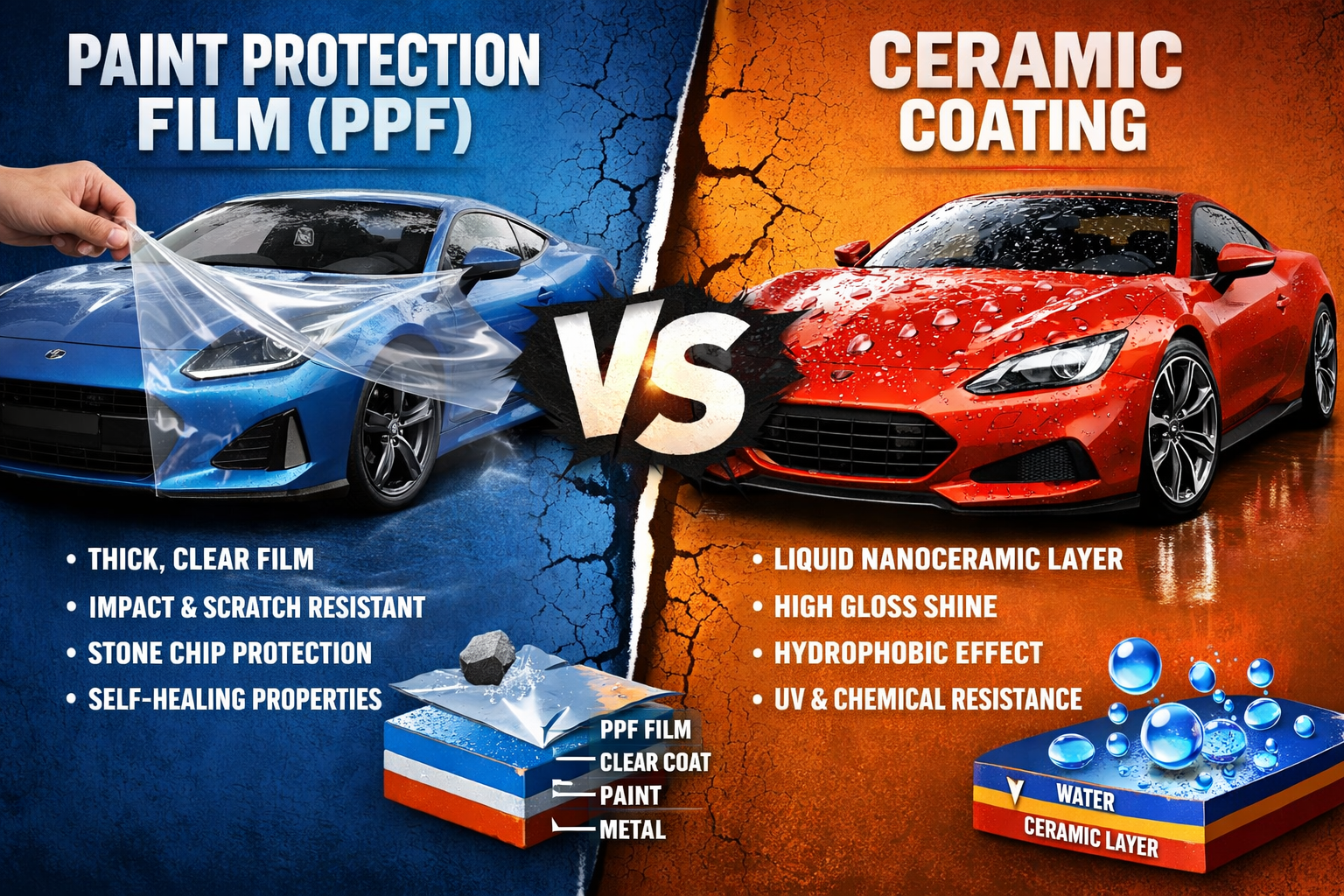
Paint protection film (PPF) is a clear, flexible layer of polyurethane film that gets applied directly to your car’s panels. Think of it as a physical shield sitting on top of the paint.

It absorbs the kind of damage paint can’t handle on its own: stone chips from highway driving, scratches from car park trolleys, scuffs from tree branches, and even minor scrapes. Higher-quality films have a self-healing top layer, which means light scratches in the film disappear with heat from the sun or warm water.

Most people don’t wrap the entire car. The common approach is a front-end kit covering the bonnet, front bumper, headlights, mirrors, and the leading edge of the guards. These are the panels that cop the most from road debris.

In Australia, a professional front-end PPF installation typically runs between $1,500 and $3,000, depending on the vehicle and the brand of film. A full-body wrap starts from around $5,000 and can exceed $8,000 for larger vehicles or premium film brands. Quality film from a reputable installer usually carries a warranty of seven to ten years.

Key points: 

  • Absorbs stone chips, scratches, and minor scuffs before they reach your paint 
  • Self-healing top layer on quality films removes light scratches with heat 
  • Front-end kit: $1,500–3,000. Full body: $5,000–8,000+ 
  • Lasts 7–10 years with quality film and professional installation 
  • Does not add gloss, repel water, or make washing easier 

What ceramic coating actually does

Ceramic coating is a liquid polymer that bonds chemically to your paint’s clear coat. Once cured, it creates a hard, smooth layer that makes the surface hydrophobic – water beads up and rolls off, taking dirt with it. 

The main benefits are practical. Your car stays cleaner for longer between washes. Bird droppings, tree sap, and road grime are easier to remove because they sit on top of the coating rather than bonding to the paint. The coating also provides UV protection, which matters in Australia where sun exposure fades and oxidises paint faster than in milder climates. 

Professional ceramic coating in Melbourne typically costs between $700 and $2,000. The price depends on vehicle size, how many layers are applied, and whether paint correction is needed beforehand. Paint correction – polishing out swirl marks and minor scratches so the surface is clean before the coating goes on – adds to the cost but makes a big difference to the result. 

Key points: 
  • Creates a hydrophobic surface that repels water, dirt, and contaminants 
  • Protects against UV damage, bird droppings, tree sap, and chemical staining 
  • Professional application in Melbourne: $700–$2,000 
  • Lasts 2–5 years depending on the product and maintenance 
  • Does not prevent stone chips, scratches, or dents – it is not a physical barrier 

PPF vs ceramic coating at a glance

 Paint protection film Ceramic coating 
What it protects against Stone chips, scratches, scuffs, minor impacts UV damage, bird droppings, tree sap, chemical staining 
Type of protection Physical barrier (film on the surface) Chemical bond (liquid polymer cured to clear coat) 
Original paint kept Prevents stone chips YesNo 
Makes washing easier No Yes – dirt and water slide off 
UV protection Limited Yes 
Typical cost (installed) $1,500–$3,000 (front end) $700–$2,000 (full car) 
How long it lasts 7–10 years 2–5 years 
Can they be combined? Yes – ceramic coating can be applied on top of PPF Yes – adds hydrophobic properties and UV resistance to the film 
These are general industry price ranges for professional installation in Australia. Costs vary by vehicle size, product brand, and installer. Always get a quote for your specific car.

How to decide between them

  • They protect against different things, so the question isn’t really which one is better. It’s which type of damage you’re most concerned about. 
  • If your main worry is stone chips and scratches, PPF is the only option that provides physical protection. Ceramic coating won’t help here. 
  • If your main concern is keeping the car clean and protecting the paint from UV, sap, and staining, ceramic coating is the more practical and affordable choice. 
  • If the car is new, recently resprayed, or high-value, consider both. You can apply ceramic coating on top of paint protection film. The PPF handles the physical protection while the ceramic layer makes the surface easier to clean and adds UV resistance. This combination is common on newer and higher-value vehicles where the owner wants comprehensive protection. It costs more, but it covers both categories of damage. 
  • If the car is older or you’re working to a budget, ceramic coating on its own gives the best return. It won’t stop chips, but it will keep the paint looking better for longer and reduce your washing time. For most daily drivers, that’s the more noticeable benefit. 

What’s not worth your money

Not every product that claims to protect paint actually does. A few things to be cautious about: 

  • Spray-on sealants sold at dealerships often cost $500 to $1,000 but use products you could buy off the shelf for $30. They’re typically applied in minutes rather than the hours a proper ceramic coating takes, and they rarely last more than a few months. 
  • Cheap ceramic spray products from auto shops can add a temporary hydrophobic effect, but they wash off after a few weeks. They’re fine as a maintenance product between professional coatings, but they’re not a substitute for one. 
  • Budget PPF from unknown brands tends to yellow, peel, or lose clarity within a year or two. The film itself is only part of the cost – the installation quality matters just as much. Poorly fitted film with visible edges or bubbles looks worse than no film at all. 

If you’re going to invest in paint protection, it’s worth doing properly. Cheap versions of either product tend to create more problems than they solve. 

Protecting your paint after a repair

If your car has just been through a panel repair or respray, the paintwork is at its best. That’s the ideal time to think about protection, because the surface is clean, corrected, and free of defects. Applying PPF or ceramic coating to freshly finished panels locks in that quality before the road starts wearing it down. 

Want to protect your paintwork after a repair? Ask us about your options when you pick up your car. 
Hail damage repair service

WE WORK WITH ALL INSURERS

© 2026 Surrey Accident Repair Centre
Powered by: