Minor cosmetic damage falls into three broad categories, and the repair approach is different for each.
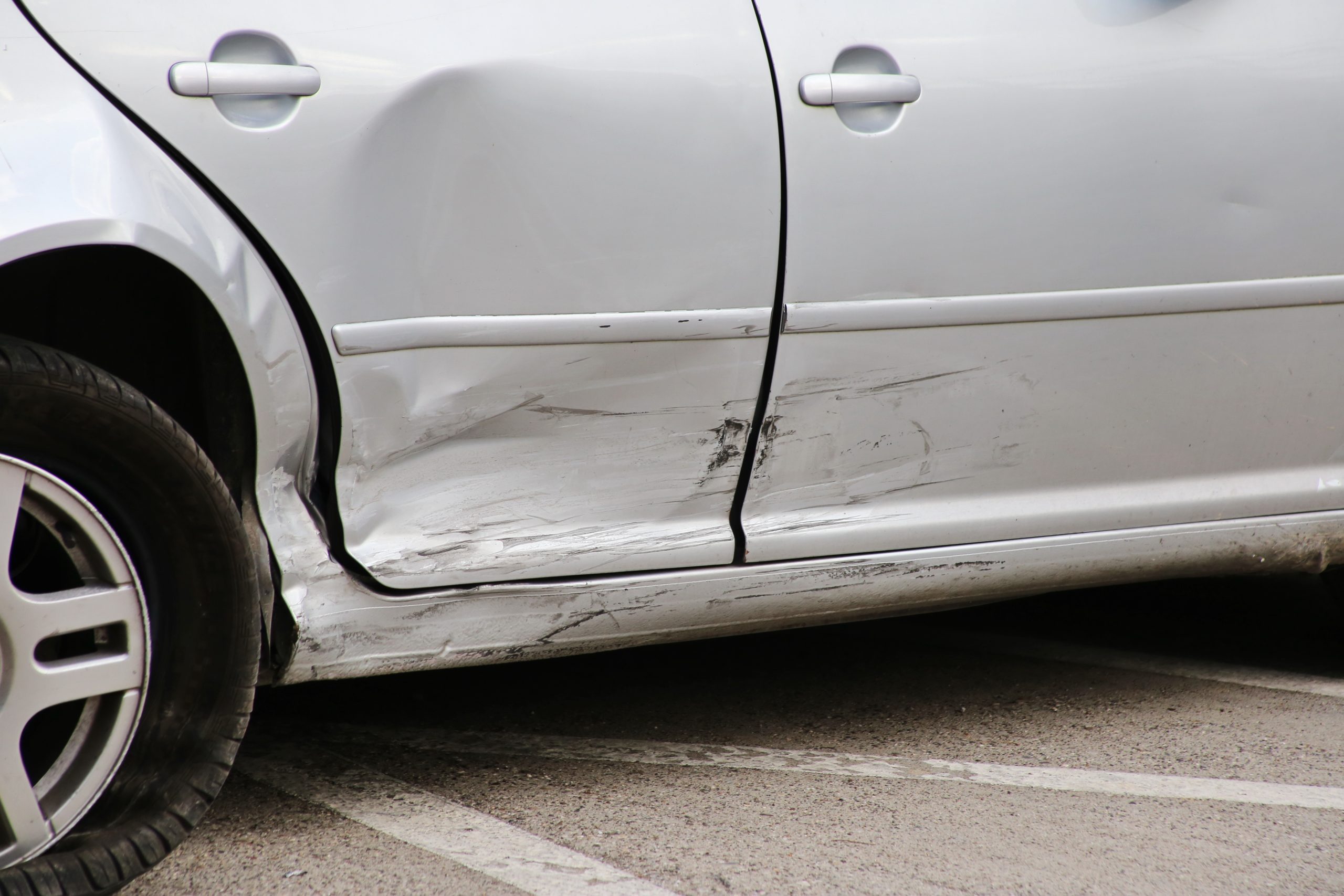
Scratches range from barely visible to deep enough to see bare metal. The quick test: run your fingernail across the scratch. If your nail doesn’t catch, the damage is only in the clear coat – the protective top layer of your paint. If your nail does catch, the scratch has gone deeper into the paint or primer, and it needs professional repair.
Scuffs are paint transfer from another surface – another car’s bumper, a concrete pillar, a shopping trolley. They often look worse than they are because you’re seeing someone else’s paint sitting on top of yours. Many scuffs come off with a machine polish.
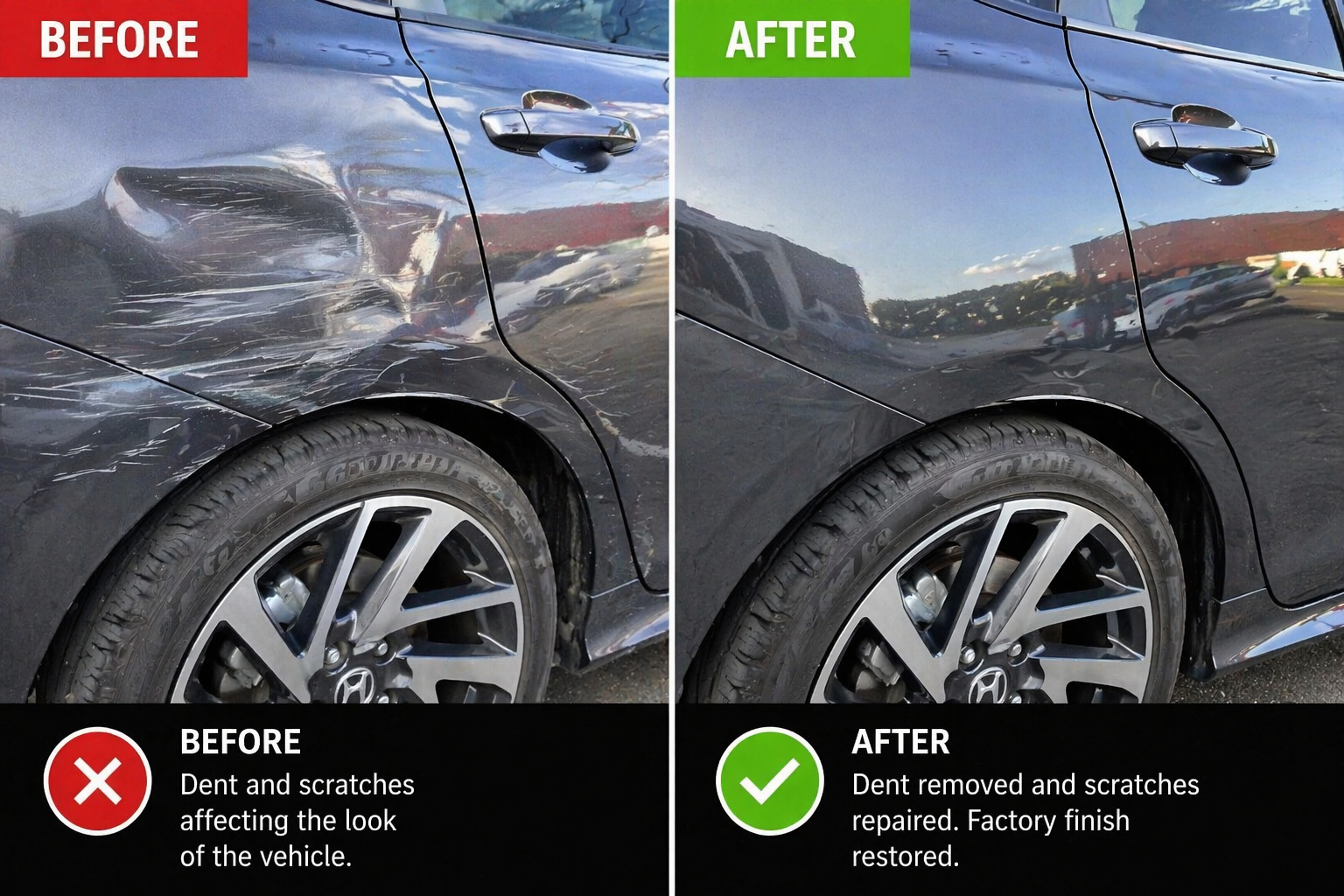
Minor dents are the door dings, car park impacts, and small hail marks that dint the panel without cracking the paint. If the paint is still intact, these are often good candidates for paintless dent removal. If the paint is cracked or chipped around the dent, it needs conventional repair and repainting.
The repair method depends on the damage type and how deep it goes.
Surface scratches and scuffs that haven’t gone through the clear coat can usually be removed with a cut and polish – a machine buffing process that levels the clear coat around the damage. This is the quickest and cheapest fix, and most scratches you can’t feel with your fingernail fall into this category.
Deeper scratches that have gone through to the paint or primer need a spot respray or panel respray. The damaged area is sanded back, primed, colour-matched, and repainted to blend with the surrounding panels. A good panel beater will match the colour so you can’t tell where the repair was done.
Minor dents with intact paint are usually repaired using paintless dent removal (PDR). A technician uses specialised tools to massage the metal back into shape from behind the panel, without touching the paint. It’s faster and cheaper than conventional repair because there’s no filling, sanding, or repainting involved.
Dents where the paint is damaged need conventional dent repair – the panel is reshaped or filled, then sanded, primed, and repainted to match. This takes longer and costs more than PDR, but it’s the only option when the paint surface is compromised.
| Repair type | Typical cost range |
|---|---|
| Cut and polish (localised scratches/scuffs) | $100 – $300 |
| Spot or panel respray | $400 – $1,200 |
| Paintless dent removal (per dent) | $80 – $250 |
| Conventional dent repair + respray | $300 – $800+ |
A few things push costs higher:
For most everyday cars with standard damage, repairs often come in at the lower end of these ranges.
For most minor cosmetic damage, probably not.
Here’s the calculation. Check your policy’s Product Disclosure Statement (PDS) for your excess amount – that’s what you pay before the insurer covers anything. If your excess is $700 and the repair costs $500, claiming makes no sense. You’d pay $700 to have the insurer cover nothing.
Even when the repair cost sits above your excess, the margin matters. If your excess is $700 and the repair is $900, the insurer is only covering $200. And that claim goes on your record.
The premium impact is easy to overlook. Making a claim – even a small one – can reduce your no-claims bonus and push your premium up at renewal. Across the Australian market, at-fault claims can increase premiums by 20% to 50%. Over two to three renewal periods, that increase can add up to far more than the original repair would have cost out of pocket.
Before claiming for minor cosmetic damage, ask yourself:
For cosmetic damage with no third party involved – a car park ding, a trolley scuff, a scratch from a tight driveway – paying privately almost always works out better than claiming.
The exception: if the damage was caused by someone else and you have their details, their insurance should cover the repair. Your no-claims bonus stays intact.
Not every scratch needs immediate attention. But some damage is worth sorting sooner rather than later.
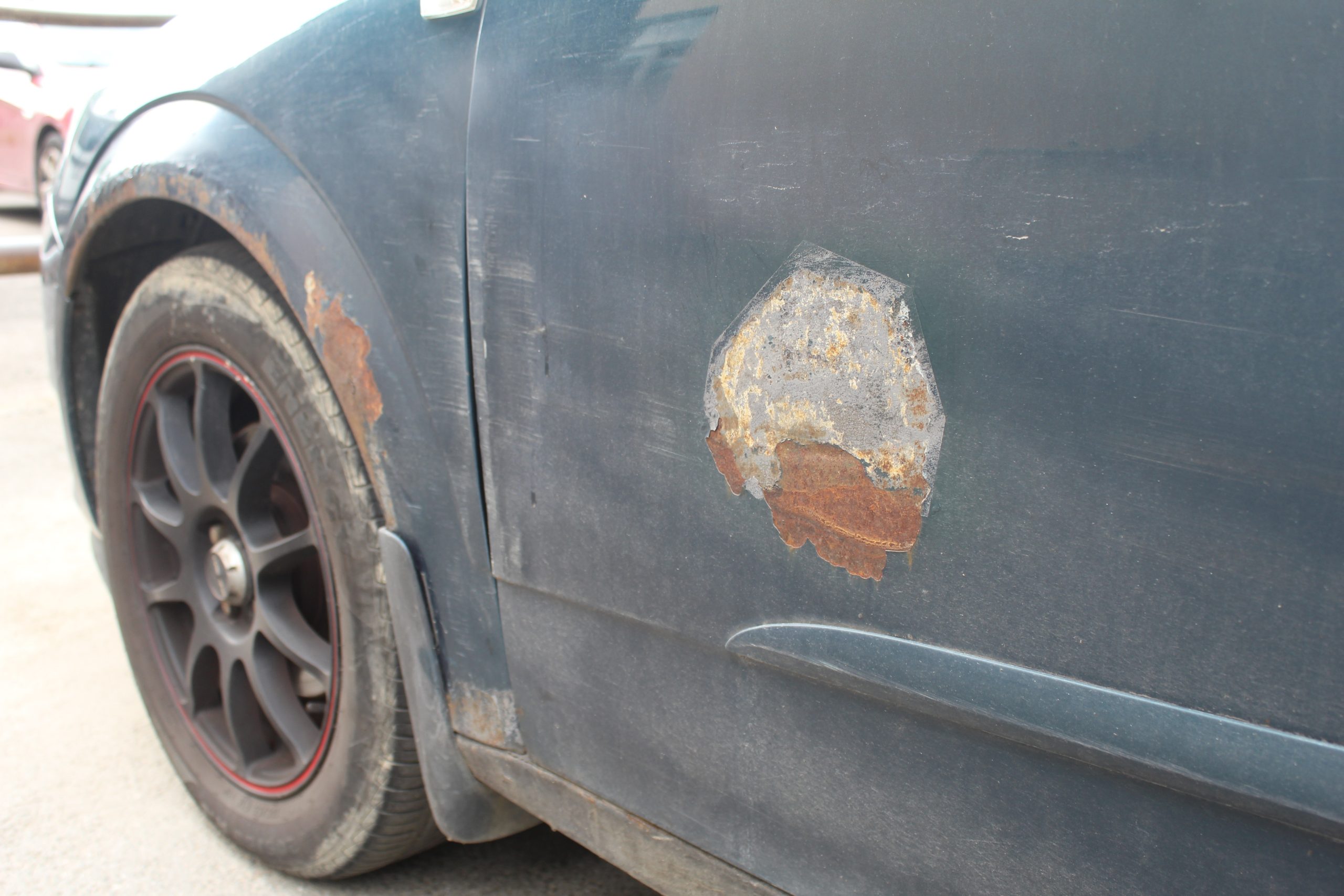
Rust risk. Any scratch or chip that exposes bare metal will rust. Melbourne’s wet winters speed this up considerably. A scratch that costs $200 to fix now can turn into a $2,000 panel replacement if rust takes hold and spreads underneath the paint. This is the strongest reason not to ignore deeper scratches, even small ones.
Resale value. Buyers notice cosmetic damage, and they discount for it. A few hundred dollars in minor repairs before listing your car can return multiples at sale. A car with visible dents and scratches signals neglect to a buyer, even if the mechanicals are perfect.
Lease returns. If you’re on a novated lease or any lease arrangement, end-of-lease inspections charge a premium for cosmetic damage. A dent that would cost $150 to repair at a panel beater during the lease can attract a $400+ charge on the inspection report. Getting minor damage fixed before your return date saves money.
Older cars you’re keeping. If you’re driving a 15-year-old car with 200,000 km on it and you’re not planning to sell, a cosmetic scratch probably isn’t worth the spend. As long as the paint isn’t broken through to bare metal, you can live with it.
For most of the minor damage people put off – the car park dings, the trolley scuffs, the scratches from tight parking across Melbourne’s eastern suburbs – the repair is usually cheaper and faster than expected. A PDR job on a single dent can take under an hour. A cut and polish on a surface scratch is even quicker. Even a spot respray on a deeper scratch is typically a same-day job.
The cost of leaving it isn’t always obvious. Rust spreads. Resale value drops. And that scratch you notice every morning doesn’t get less annoying with time.
If you’re not sure whether your damage needs attention, bring it in for a look. We’ll tell you what’s involved, what it’ll cost, and whether it’s worth doing – no obligation.