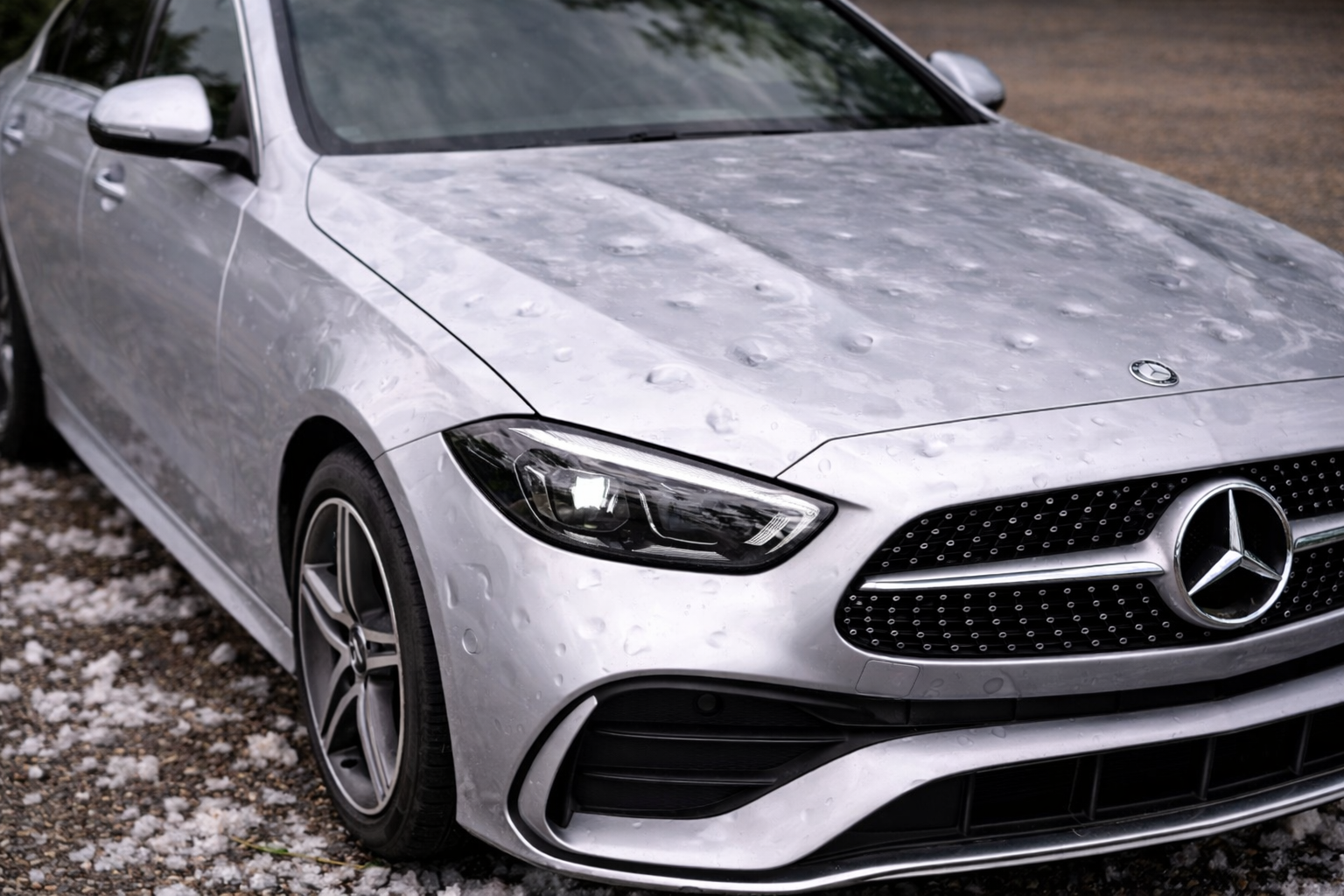
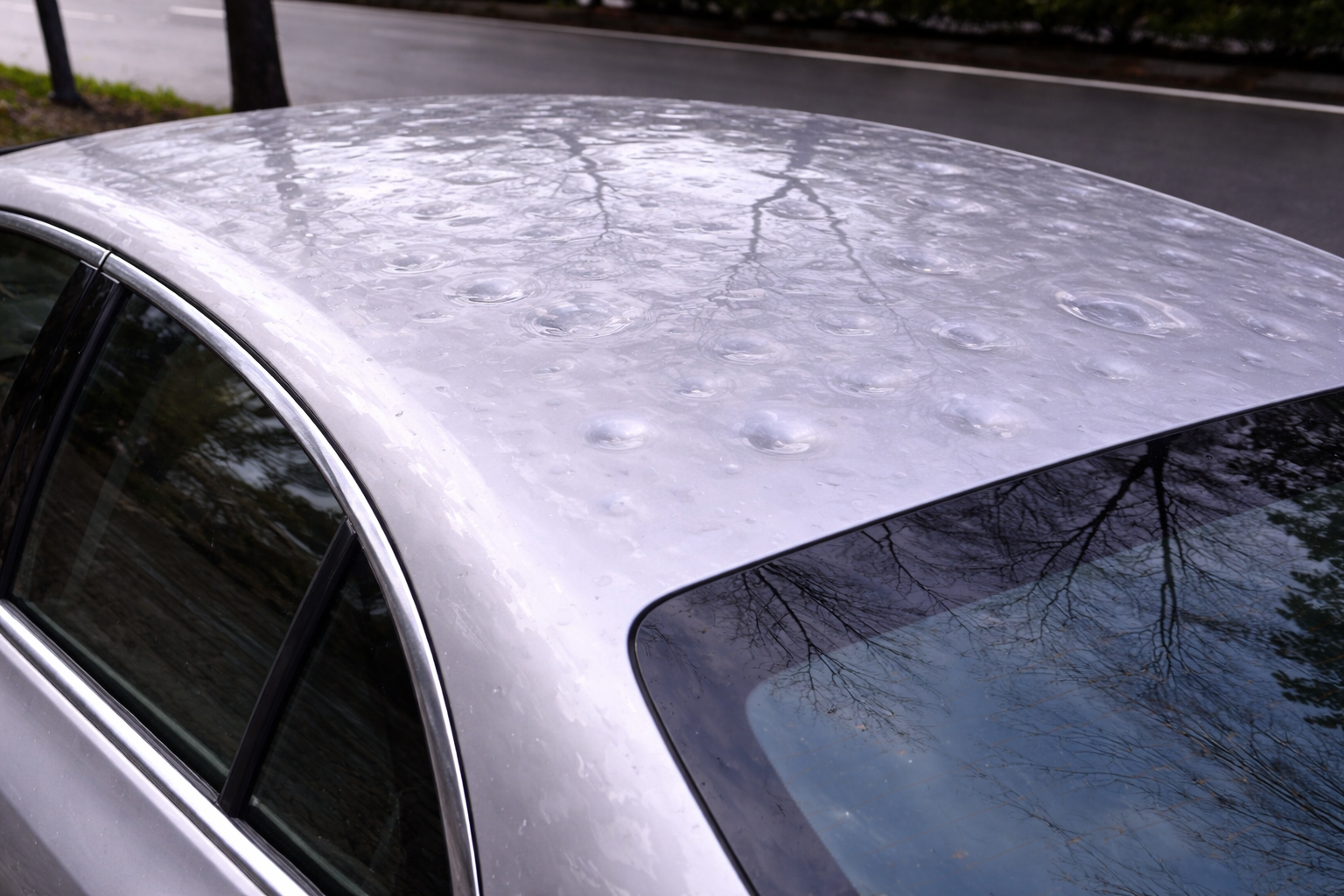
Minor damage – small, shallow dents where the paint is intact. No creases, no cracking. This is the most common result after a typical Melbourne storm. It looks bad but it’s usually the easiest and cheapest to fix.
Moderate damage – larger dents across multiple panels, with some paint cracking or chipping. The roof and bonnet tend to cop the worst of it because they face the sky.
Severe damage – deep dents with creased metal, cracked or flaking paint, a cracked windscreen, and damage to trim, mirrors, or lights. This is what serious hailstorms with golf-ball-sized stones leave behind.
Take photos of everything while you’re at it. Wide shots of each panel, close-ups of individual dents, and photos of any cracked glass or damaged trim. You’ll need these if you claim on insurance, and they’re useful when getting a repair quote.
| PDR | Traditional Repair | |
|---|---|---|
| Best for | Shallow dents with intact paint | Deep dents, creased metal, cracked paint |
| What’s involved | Metal massaged from behind the panel | Strip, reshape, fill, prime, paint, clear coat |
| Original paint kept | Yes | No – panel is resprayed and blended |
| Cost (minor hail) | $500 – $1,500 | $1,000 – $5,000 |
| Cost (severe hail) | Not Suitable | $5,000 – $10,000+ |
| Cost (severe hail) | Hours to a few days | One to four weeks |
| Limitations | Won’t work on cracked paint, sharp creases, or panel edges | Higher cost, longer off the road, colour matching required |
A good panel beater will explain which method suits each panel and why. You might get PDR on the roof and doors where the paint held up, and traditional repair on the bonnet where it cracked. The goal is always the best result for each section of damage.
This is where most people get stuck. The answer depends on what cover you have, how much your excess is, and how bad the damage is.
Only comprehensive car insurance covers hail damage. If you have third-party property damage or third-party fire and theft, hail isn’t included. Check your Product Disclosure Statement (PDS) for the detail on what your policy covers and any exclusions or embargo periods that might apply.
After a major storm, your insurer may declare a catastrophe event. This doesn’t change your cover, but it does mean longer wait times. When thousands of claims come in at once, assessors and repairers are stretched thin across the region. The sooner you lodge, the sooner you get into the queue.
You also have the right to choose your own repairer in Victoria. Your insurer may recommend one of their preferred repairers, but the decision is yours.
If the damage spans multiple panels and the repair bill is in the thousands, claiming is usually the right call. You’ll pay your excess, typically $500 to $800, and the insurer covers the rest.
If the damage is minor and PDR will fix it for $300 to $600, the cost may sit close to or below your excess. Paying out of pocket keeps the claim off your record and avoids any potential impact on your premiums at renewal.
If the repair cost approaches your car’s market value, the insurer may declare it a write-off. They pay out the market value minus your excess instead of repairing it. This is worth knowing before you lodge a claim. If your car is valued at $8,000 and the repair comes in at $7,000, the insurer may decide it’s not worth fixing.
Hail repairs take longer than standard collision work. After a major storm, every panel beater in the area is dealing with dozens or hundreds of damaged vehicles at once.
For minor PDR-only repairs without an insurance claim, you could be looking at a few days. For multi-panel traditional repairs going through insurance, the timeline stretches. Assessor availability, parts lead times, and workshop backlogs can push a moderate repair out to two to four weeks during a busy storm season, sometimes longer.
Melbourne’s eastern suburbs are no stranger to severe storms. If a big one has just swept through Box Hill, Canterbury, or Surrey Hills, expect demand for repairers to spike. The earlier you book an assessment, the earlier you’re in the queue.
Bring your car into Surrey Accident Repair Centre on Canterbury Road, Surrey Hills for a straightforward assessment. We’ll walk you through your options and help you decide whether to claim or pay privately.
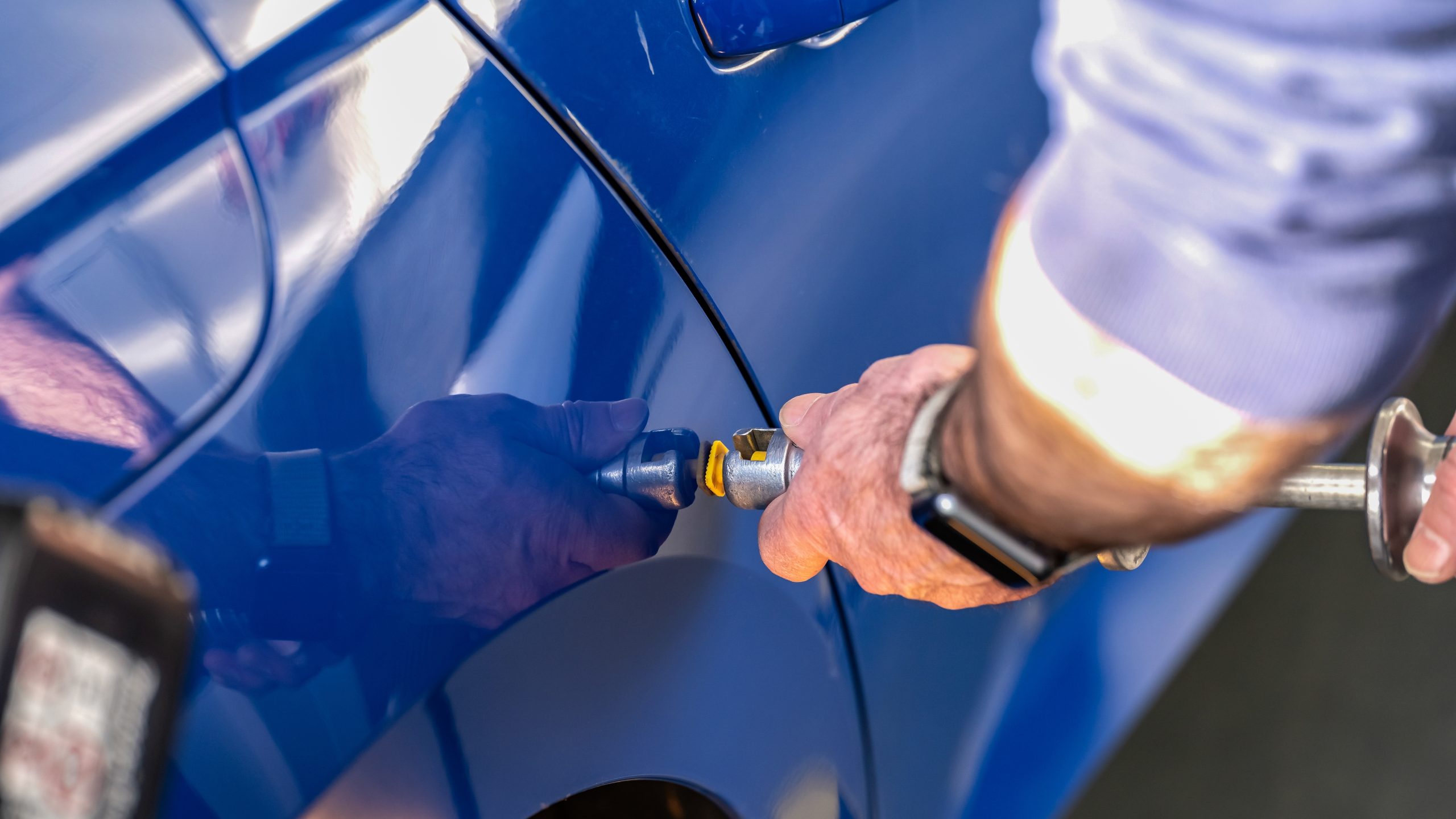
Repairing hail damage before selling can make sense if the car is otherwise in good condition and the repair cost is likely to be lower than the value lost at sale. Visible hail dents can make buyers assume the car has been neglected, even when the damage is cosmetic.
It may not be worth repairing every dent before sale. If the car is older, already has high kilometres or has a low market value, the repair cost may not return enough extra sale value. In that case, it may be better to get a repair quote first, then decide whether to repair it, disclose the damage, or adjust the asking price.
Hail damage can reduce trade-in value because the dealer has to allow for repair cost, resale risk and the possibility of hidden damage. Even shallow dents across the roof, bonnet and boot can make the car harder for a dealer to present on the lot.
A trade-in assessor will usually look at the number of damaged panels, whether the paint is cracked, whether the glass or trim is affected, and whether the car would need PDR or traditional panel repair. A repair quote before trade-in can help you understand whether the dealer's deduction is reasonable.
Many buyers will still care, even if the hail damage is cosmetic. Dents across the roof or bonnet are easy to notice in the right light, and buyers may use them to negotiate the price down.
Cosmetic hail damage is less serious than cracked paint, broken glass or damaged trim, but it still affects presentation. A professional assessment can tell you whether paintless dent repair is possible and whether the original factory paint can be kept.
Claiming on insurance before selling may make sense if the damage is significant and the repair cost is well above your excess. It may not make sense if the repair cost is close to the excess or if the car's market value is low enough that a claim could raise write-off questions.
Before lodging a claim, check your Product Disclosure Statement and ask your insurer how the claim may affect your excess, premiums, no-claim discount and repair pathway. If you are unsure, get a hail damage assessment first so you understand the likely repair cost.
You can sell a car with unrepaired hail damage, but the damage should be disclosed clearly to the buyer. Good photos and an honest description reduce the risk of disputes and help the buyer understand what they are looking at.
If you are selling privately, take photos in good light from several angles so the dents are visible. If you already have a repair quote, providing it can help buyers make a more informed decision and may stop them from assuming the damage is worse than it is.